


What Is Full Coverage Dental Insurance?
Have you ever wondered how people keep their teeth bright, healthy, and strong without spending all their pocket money? The secret is often having a good health plan for your teeth. When people talk about full coverage dental insurance, they mean a special kind of plan that helps pay for almost all kinds of tooth care. This includes your normal check-ups, cleaning visits, and even bigger fixes like fillings or crowns. Think of it like a safety shield for your mouth. It steps in to pay a big part of the bills so your family does not have to worry about high costs when a tooth hurts. Many families look for this specific type of insurance because it gives them peace of mind. Knowing that a surprise trip to the dentist will not break the bank makes going to the clinic a lot less scary for everyone involved.
Table of Contents
Why You Need a Healthy Smile
Taking care of your teeth is one of the most important daily habits you can learn. When your teeth feel good, you can eat your favorite crunchy apples, smile big for photos, and talk clearly without any pain. But sometimes, brushing and flossing at home are just not enough. Tiny problems can hide where your toothbrush cannot reach. That is why having full coverage dental insurance is so helpful. It makes it super easy to visit the dentist twice a year just to make sure everything is okay. Your dentist can spot tiny cavities long before they turn into big,ouchy problems. By catching things early, you save yourself a lot of discomfort and time in the dentist’s chair. A healthy smile truly makes you feel more confident and ready to take on the world every single day.
How Dental Insurance Actually Works
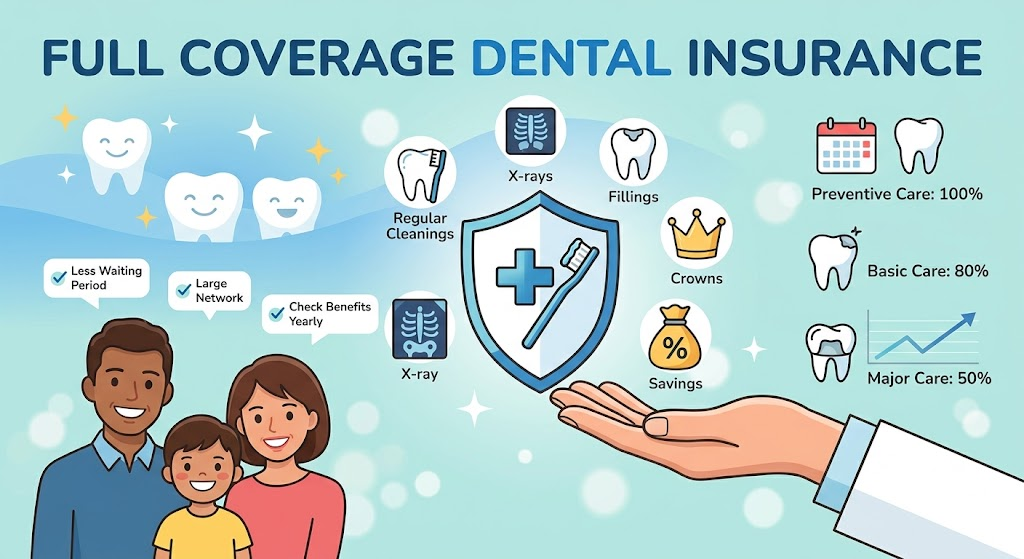
Insurance can sound like a giant puzzle with too many confusing pieces. Let us break it down into very simple steps so it makes total sense. Every month, a person pays a small amount of money called a premium to keep their insurance active. In return, the insurance company agrees to help pay for dental visits. Usually, plans follow something called the 100-80-50 rule. This means they pay 100 percent for routine check-ups, 80 percent for medium fixes like fillings, and 50 percent for major work. With full coverage dental insurance, you get the best mix of help across all these different levels. Of course, you still need to check which doctors accept your specific plan before booking an appointment. Reading the little details helps you understand exactly what is free and what requires a tiny copay from your own piggy bank.
Preventive Care: Stopping Trouble Early
The best way to fight a monster is to stop it before it even grows big. The same rule applies to your teeth! Preventive care is all about stopping cavities and gum sickness before they start causing trouble. When you have full coverage dental insurance, preventive visits like cleaning and polishing usually cost you zero extra dollars. The insurance company wants you to go in for regular cleanings because it keeps your teeth healthy and stops expensive problems later. During these visits, a friendly dental hygienist scrapes away hidden plaque and paints a special protective gel called fluoride on your teeth. Fluoride acts like a tiny suit of armor that keeps your enamel strong and shiny. Going to these quick visits twice a year is the easiest way to keep your smile glowing bright.
What Does “Full Coverage” Really Cover?
Many people get surprised because “full coverage” does not always mean 100 percent of every single bill is paid. It actually means the plan covers a very wide variety of services. Under a good full coverage dental insurance policy, you get help with preventive care, basic treatments, and major procedures. Basic treatments include fixing small cavities with tooth-colored fillings or treating sore gums. Major procedures include putting in crowns, bridges, or even root canals when a tooth gets very sick inside. It is always smart to look at the chart of benefits before signing up. This way, you know for sure if things like braces for straightening teeth or special jaw treatments are part of the deal. Knowing your plan inside and out keeps nasty surprises away.
Waiting Periods and Deductibles
Before your insurance kicks in to pay for big treatments, there are a few rules you should know about. A deductible is a small amount of money you have to pay out of your own pocket first before the insurance starts chipping in. Also, some plans have a waiting period. This means you might have to wait a few months after buying your full coverage dental insurance before they pay for major fixes like crowns. Insurance companies do this to make sure people only buy plans when they actually need them over time. Preventive check-ups usually do not have a waiting period, so you can start getting your teeth cleaned right away. Asking your insurance helper about these rules on day one makes everything super clear and easy to follow.
Finding the Right Plan for Your Family
Every person has a different smile, and every family has a different budget. That means the best plan for your friend might not be the best one for you. When shopping for full coverage dental insurance, you should look closely at what your family needs most. Do you have a teenager who might need braces soon? Or do you just need basic cleanings and occasional fillings? Comparing a few different choices online helps you see which company gives the best value for your money. You can also check if your favorite family dentist takes that specific insurance card. Taking a little time to compare options ensures your smile stays happy and your wallet stays balanced all year long.
In-Network vs. Out-of-Network Dentists
Have you ever heard the words “in-network” and wondered what they mean? It is actually a very simple idea. Insurance companies make friendly deals with certain dentists to charge lower prices for their members. These doctors are called in-network providers. When you use full coverage dental insurance with an in-network doctor, your visit costs a lot less. If you choose an out-of-network doctor, the insurance company might pay less money, leaving you to pay the rest. Staking with in-network offices is usually the smartest choice because it stretches your insurance dollars further. Always ask the front desk staff at the dental clinic, “Do you take my insurance network?” before sitting down in the big chair.
Tips to Maximize Your Dental Benefits
If you have a dental plan, you want to make sure you are getting the absolute most out of it. Many people forget that insurance benefits usually reset at the end of every single year. This means any unused check-ups or savings do not roll over to the next year; they simply disappear! Using your full coverage dental insurance for those two free yearly cleanings is a great way to use what you pay for. If your dentist says you need a small filling, try to get it done before December ends. Keeping track of your yearly limits and remaining balances helps you stay smart and keeps your teeth in top shape without wasting a single penny.
Common Myths About Dental Plans
There are lots of silly stories floating around about how dental plans work. Let us bust a few myths right now! Some people think that having full coverage dental insurance means you never have to pay a single cent at the clinic. As we learned earlier, you might still have small deductibles or copays for bigger fixes. Another common myth is that you can buy insurance today and get expensive braces paid for tomorrow. Because of waiting periods, insurance companies require you to keep the plan active for a while before covering major orthodontics. Knowing the real facts helps you make smart choices and stops you from believing tricky rumors you might hear from friends.
Conclusion
Navigating full-coverage dental insurance ultimately comes down to balancing your predictable routine care needs against potential major dental expenses. While “full coverage” typically means a plan includes preventive, basic, and major services rather than 100% free care, understanding the core components can help you maximize your benefits:
Frequently Asked Questions (FAQs)
1. What does full coverage dental insurance actually pay for?
It usually pays for a wide range of services including normal check-ups, cleanings, fillings, root canals, and sometimes crowns, depending on the exact plan rules.
2. Are regular teeth cleanings free with my insurance?
Yes! Most plans cover preventive cleanings and routine check-ups at 100 percent, meaning you do not have to pay anything extra for your twice-a-year visits.
3. What is a waiting period in dental insurance?
A waiting period is a set amount of time you must wait after buying your plan before the insurance company will help pay for major dental work like crowns or bridges.
4. Can I go to any dentist I want?
You can go to almost any doctor, but staying with an in-network dentist helps you save the most money because they have special cost agreements with your insurance company.
5. Do my dental benefits roll over to the next year?
No, most yearly dental benefits reset on January 1st. If you do not use your yearly check-ups or limits, you lose them, so it is best to use them up!
6. Is buying dental insurance worth the cost?
If you want to keep your teeth healthy, avoid surprise bills, and save money on big procedures, having a good dental plan is definitely a smart choice for your family.
Leave a Reply