


Have you ever looked at a tiny, wiggly tadpole in a pond and wondered how it turns into a jumping green frog? It seems like magic, doesn’t it? This transformation is actually one of nature’s coolest tricks, called metamorphosis. In this guide, we will dive deep into the life cycle of a frog to see how these creatures grow. Whether you are doing a life cycle of a frog worksheet for school or just love nature, you are in the right place. Grab your explorer hat, and let’s hop right into the world of amphibians!
What is the Life Cycle of a Frog?
When we talk about the life cycle of a frog, we are looking at the series of changes a frog goes through from birth to old age. Unlike humans, who look like smaller versions of their parents when they are born, frogs change their entire body shape. They start their lives underwater breathing through gills, just like fish. As they grow, they develop lungs and legs to live on land. This journey is a beautiful circle of life that helps keep our environment healthy and balanced.
The Beginning in a Tiny Egg
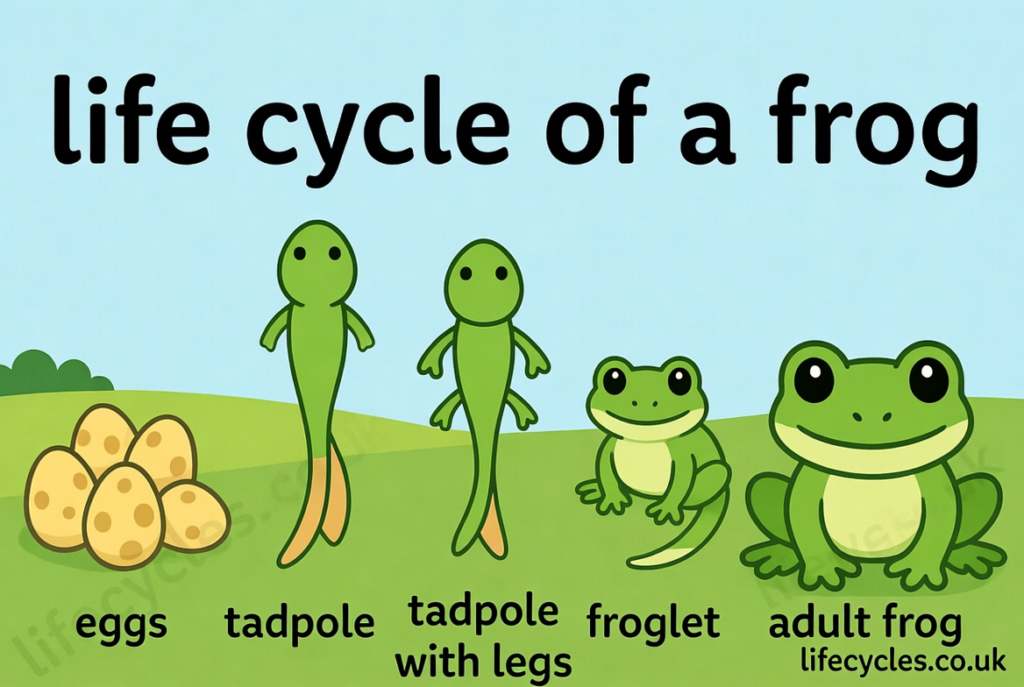
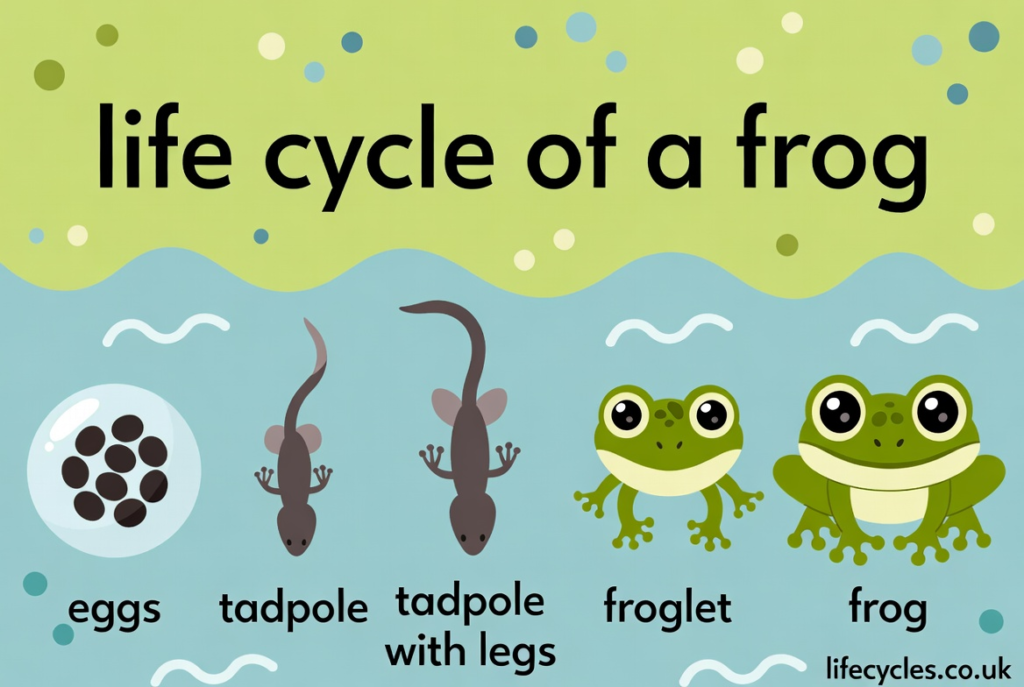
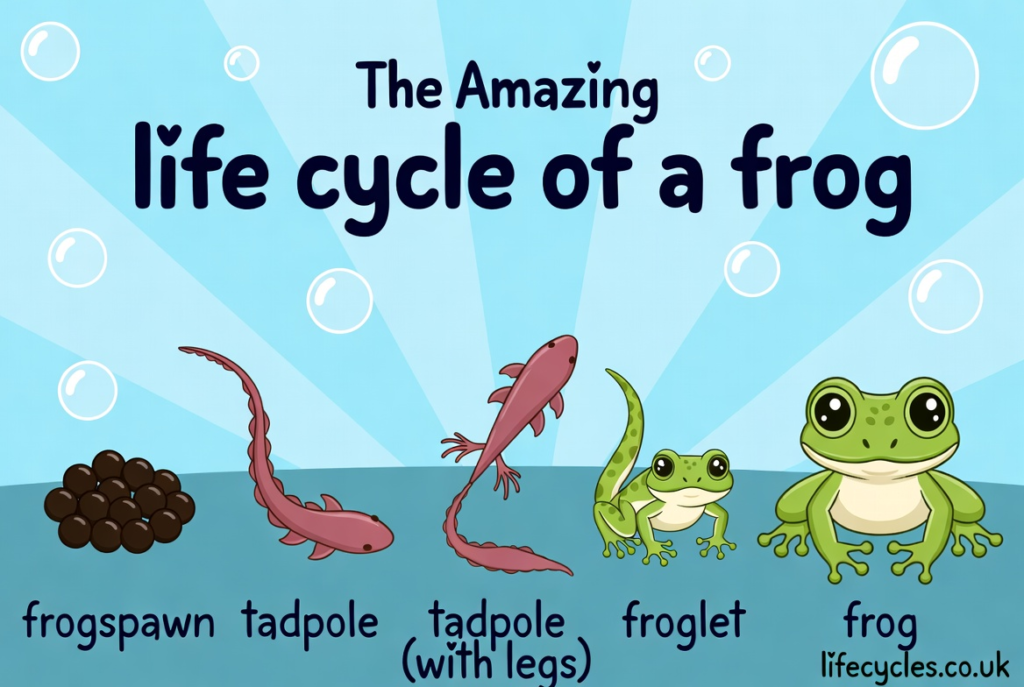
Every life cycle of a frog for kids starts with a tiny floating ball of jelly. A mother frog lays hundreds, or even thousands, of eggs at once in a pond. This big clump of eggs is called “frogspawn.” The jelly protects the tiny embryos inside from fish that might want a snack. If you look at life cycle of a frog real pictures, you will see a small black dot inside each clear bubble. That little dot is a baby frog waiting to hatch and start its big adventure in the water.
The Wriggly Tadpole Appears
After about one to three weeks, the eggs hatch, and out come the tadpoles! At this point in a life cycle of a frog, the creature doesn’t look like a frog at all. It has a long tail and no legs. Tadpoles spend all their time swimming and eating algae. They breathe through external gills that look like tiny feathers on the sides of their heads. It is very important for tadpoles to stay in the water because they cannot breathe air yet. They are basically tiny, swimming underwater lawnmowers!
Growing Those Strong Back Legs
As the weeks go by, something amazing happens. The tadpole starts to grow two tiny bumps near its tail. These bumps quickly turn into strong back legs! This is a major turning point in the life cycle of a frog. While the legs are growing, the tadpole’s body also starts to change on the inside. It begins to develop lungs so that it can eventually breathe air. Even though it has legs now, it still uses its long tail to swim around the pond and find food.
Front Legs and Big Changes
Once the back legs are strong, the front legs start to pop out. Now, the creature is starting to look a lot more like a real frog. However, it still has a very long tail, which makes it look a bit silly! During this part of the life cycle of a frog, the mouth starts to widen, and the eyes move further apart. The gills inside its body disappear completely as the lungs take over. It is preparing for its brand-new life on the grassy shores of the pond.
The Froglet Phase
We call a frog with a tail a “froglet.” This is the teenage stage of the life cycle of a frog. An interesting thing happens here: the froglet’s tail actually starts to shrink! The body absorbs the tail and uses it as a source of nutrients and energy. Because it is getting food from its own tail, the froglet doesn’t need to eat much else during this week. It starts to spend more time near the edge of the water, practicing its hopping and getting ready to breathe fresh air.
The Fully Grown Adult Frog
Finally, the tail is completely gone, and we have a full-grown adult! In this final stage of the life cycle of a frog, the animal is ready to leave the water and explore the land. Adult frogs have powerful back legs for jumping and sticky tongues for catching flies. They will spend their lives eating bugs and staying near damp places. Eventually, the adult frogs will find a mate, return to the pond, and lay eggs of their own to start the whole process over again.
Why Do We Study the Life Cycle of a Frog?
Learning about what is the life cycle of a frog helps us understand how healthy our planet is. Frogs are “bioindicators,” which means they are very sensitive to pollution. If the water is dirty, the eggs won’t hatch. By studying a life cycle of a frog diagram, students can see how every stage of life depends on clean water and a safe environment. Protecting our ponds means we get to keep watching these amazing transformations happen every single spring.
Using a Life Cycle of a Frog Worksheet
If you are a student or a teacher, using a life cycle of a frog worksheet is a great way to memorize these steps. You can practice drawing the eggs, the tadpole, and the adult frog in a circle. Adding life cycle of a frog real pictures to your school project can make it look professional and exciting. Mapping out the journey from water to land helps us appreciate the hard work these little amphibians do just to grow up. It is a lesson in patience and change!
Fun Facts About Frog Metamorphosis
Did you know that some frogs carry their tadpoles on their backs? Or that some tadpoles can stay in the water for a whole year before turning into frogs? The life cycle of a frog varies a little bit depending on where the frog lives. For example, tropical frogs might grow much faster than frogs in colder places. No matter where they live, the goal is always the same: transform from a swimming herbivore into a leaping carnivore. Nature is truly full of surprises.
Conclusion
The life cycle of a frog is a beautiful example of how living things grow and adapt. From a tiny egg to a jumping adult, every stage is important for the frog’s survival. By understanding the life cycle of a frog, we learn to respect the small creatures in our backyard ponds. Next time you are near a pond, look closely—you might just see a tadpole starting its journey!
FAQs
1. How long does the life cycle of a frog take?
Most frogs go from egg to adult in about 12 to 16 weeks. However, some species, like the bullfrog, can take a whole year or more to finish their change!
2. Do all frogs live in water?
While most frogs start their lives in the water as eggs and tadpoles, many adult frogs live on land. However, they almost always need to stay near damp areas to keep their skin moist.
3. What do tadpoles eat compared to adult frogs?
Tadpoles are mostly vegetarians and eat algae and plants. Adult frogs are carnivores and eat insects, spiders, and sometimes even smaller frogs!
4. Why is a life cycle of a frog diagram usually a circle?
It is drawn as a circle because the process never ends. Adult frogs lay eggs, which hatch into tadpoles, which grow into frogs that lay more eggs. It is a continuous loop.
5. Can I keep frogspawn at home to watch the life cycle?
Yes, but you must be very careful! You need fresh pond water and the right food. It is often better to watch them in their natural habitat so they stay healthy.
6. What is the difference between a frog and a toad life cycle?
They are very similar! The main difference is that frog eggs are usually in a clump, while toad eggs are laid in long, spaghetti-like strings.
Leave a Reply